Belle Isle Books
Find us on
  • Home
  • Bookstore
    • Biography
    • Children
    • Nonfiction
    • Historical Fiction
    • History & Politics
    • Holiday
    • Literary Fiction
    • Local Virginia Authors
    • Memoir
    • Middle Grade & Young Adult
    • Mysteries & Thrillers
    • Poetry
    • Self-Help
    • E-books
    • Sale
  • Cooperative Publishing
    • Submit Your Manuscript
  • Self-Publishing
    • Get a Quote
    • Self-Publishing Services
  • About Our Books
    • Meet Our Authors >
      • Pamela Adler
      • Lorin Agedbenro
      • Eric Albright
      • Sadiq Ali
      • The Alimenti Family
      • Krystal D. Allyn
      • L. Meredith Averitt, DVM
      • Liz Ballard Hamm & Andrew Ballard
      • Missy Balusek
      • Medhaa Banaji
      • Mary Alice Barksdale and Donna Jessie Fogelsong
      • Heather Bennett
      • James Berrall
      • Dan Bessie
      • K.E. Bonner
      • S.A. Borders-Shoemaker
      • Betty Bott
      • Dave Bowles
      • Connie Bowman
      • Craig Bradley
      • Gary L. Brinderson
      • Carolyn Brodeur
      • Anna Burger
      • Caley Cantrell
      • Catherine Carson
      • Tucker Carwile
      • Larry Caylor
      • Natalie Chase
      • Cindy Chisholm
      • Ray Chung
      • Sylvia Churchill Prince
      • Duncan L. Clarke
      • Greg Clay
      • Emily Hanson Collis
      • Victoria Coniglio
      • Jennifer Cooke
      • Deanna Cox
      • Dr. Lisa Curry
      • Ron Daise
      • Cliff Davis
      • Chris Demeropolis
      • Edward Denecke
      • Kathryn Dickerson
      • Julie DiNisio, Jade Miller, & Christine Stoddard
      • Elizabeth Dodson
      • Anita Dromey
      • Greg Drost
      • Mary Culleton Dunn
      • Christel Dyer
      • Lori Epting
      • Joy Fernandez
      • Marc Ferrari
      • Dorothy Fleming
      • Harry Floyd
      • Diane Forti
      • Bridgette Fowler
      • Carol Frazier
      • Sydney Gallagher
      • Graham Gardner
      • Kathleen George
      • Karen Gloyer
      • Elizabeth Grapes
      • Gary J. Grimsley
      • Harold E. Harris, Jr.
      • Emily Peace Harrison
      • Wag Harrison
      • Joseph Hartmann
      • Harry Hathaway Warner
      • J. Matthew Helms
      • Daniel "Seth" Holliday and Daniel "Wayne" Holliday
      • Harry Holmes
      • Carolyn Hoy
      • Nancy Hubbard Clark
      • Philip Iovino
      • Judy Jamison
      • Elizabeth Javidan
      • Sheena Jeffers
      • William Jensen
      • Arnold Johnston and Deborah Ann Percy
      • Ginger Johnston Philbrick
      • Tansill Johnson
      • Dirk and Debbie Kagerbauer
      • Tim Lane
      • Emily Langhorne
      • Liz Larson
      • Brandon Layne
      • Geraldine Lee Susi
      • Martin Lehfeldt
      • T.F. Lloyd
      • Roger Loring
      • Sandrine Marlier
      • Terry Ann Marsh
      • Marjorie E. Masek
      • Mika Matsuno
      • Jeff Mayer
      • Roseanne McDonald
      • Joy Metzer
      • Peter H. Meyers
      • Eric Michlowitz
      • Angie Miles
      • Kate McCarroll Moore
      • Kara Navolio
      • Gail Nelson Canada
      • Cathy Newbanks-Hawks
      • Lauren Oakey
      • Jenny Oates Riggs
      • Liam O'Brien & Noreen O'Brien
      • Abigail Olson
      • Glen Olson
      • Jenny Olson
      • Amanda Lorraine Owen
      • Sharon Pago
      • Dr. Drew Palacio
      • Stephanie Parwulski
      • Anne Poarch
      • Grady W. Powell, Sr.
      • Jody Rathgeb
      • Isabel Reddy
      • Sabrina Rigaud-Carrié
      • John "Sonny" Robinson
      • Beth Roberts
      • John Roche
      • Kim Roedl
      • Allen Edgar Rogers
      • Keith Rustin
      • Marilyn Seigle
      • Laurie Sharp
      • Ben Sharpton
      • Bonnie Stanard
      • William Stanfield
      • Carolyn Sullivan Moore
      • Tammi Summers
      • Alicia Swain
      • Susan Swift
      • Chandra Tracey
      • Paul L. Tsompanas
      • Diane Twomley
      • Dr. Shweta Ujaoney Thackeray
      • Iris Underwood
      • Steven Vaitonis
      • Stacy Vaught
      • Kathy Varner
      • Courtney Jett Walker
      • Olga Wall
      • Doug Warren
      • Audrey Weatherstone
      • Robert E. Weems
      • Susan Weiner
      • Rebecca Wenrich Wheeler
      • Randy White
      • Julie Whitney
      • Cade Wiberg
      • Julie Ellis Williams
      • Helen L. Williamson
      • Kelly G. Williams
      • Michael K. Willis
      • Norma Woody
      • Randi Wolf Lauterbach
      • Nikki-Dee Ray Wren and David Wren
      • Edward Wright Haile
      • Nicole Wright
      • Kim Fisher Wynn
      • Luke Yesbeck
      • Karen Young Foley
      • Richard Lee Zuras
    • Meet Our Illustrators >
      • Yasemin Arkun
      • Dennis Auth
      • Brianna Baker
      • Mary Barrows
      • Jessica Berg
      • Sarah Berkheimer
      • Paige Billin-Frye
      • Melissa Blue
      • Cody Bowerman
      • Cindy Briggs
      • Okan Bülbül
      • Andrea Bures
      • Kendy Calixte
      • Craig Cameron
      • Heather Cockrell
      • Laurie Conley
      • Jeanne Conway
      • Valentina Copeland
      • Laura Craig
      • Britt Van Deusen
      • Felipe Diaz Huarnez
      • Scott DuBar
      • Parks Duffey
      • Bill Dussinger
      • Alejandro Echavez
      • Natalia Elmore
      • Susan Emery
      • Apolline Etienne
      • Sara Fox
      • Eric Freeberg
      • Heidi Gibson
      • Jessica Gibson
      • Sander Gibson
      • Cheryl Grant
      • Heather Heyworth
      • Whitney Hill
      • Kate Johnson
      • Wally Jones
      • Kate Jordan
      • Maryana Kachmar
      • Bobbie Kogok
      • Lucy Koo
      • Kelly Lane
      • Nancy LeBlanc
      • Jack Lefcourt
      • Elizabeth Lester
      • Natalia Logvanova
      • Louisa Mae
      • Kelly O'Neill
      • Lintang Pandu Pratiwi
      • Maegan Penley
      • Andrea Pinter
      • Emily Hurst Pritchett
      • Tania Ramírez Cuevas
      • Kira Ribordy
      • Christina Rodriguez-Unalt
      • Leonardo Schiavina
      • Elizabeth Scolero
      • Monique Seibel
      • Vineet Siddhartha
      • Michelle Simpson
      • Amanda Spiers
      • Nancy Taylor Atkins
      • Chad Thompson
      • Tracie Timmer
      • Susannah Wagner Merritt
      • Lindsay Wallen
      • Penny Weber
      • Mindy J.B. Whitten
      • Jen Williamson
      • Keegan Williams
      • Kyrie Woodring
    • News >
      • Blog
  • About Us
    • Events
    • Staff
    • Our Story
    • Careers
  • Contact Us
  • Staff

July 2023 - Managing Stress and Fear during the Publishing Process

7/31/2023

0 Comments

 
Picture
If you’re a writer, you already know writing is hard, and usually slow. And although it’s deeply satisfying when your article or poem or book appears in print, publishing your writing is even harder and even slower than most writers expect. Even when you think the last “i” is dotted and the last “t” is crossed in the final draft of your manuscript, your journey is just beginning. Then the submission and editing process begins!

Some authors feel their writing doesn’t need to be edited, so they move forward rapidly, only to end up publishing a poorly edited book they wind up regretting. To those writers, I say: Never underestimate the power of a good editor to transform your writing! Working with a skilled editor means letting go. If you don’t already know Microsoft Word’s tracking feature—the editing software most editors use to track corrections and revisions in a manuscript—it means learning this new technology. It means waiting weeks—or, depending on the length of a manuscript, sometimes months—for an editor to do their job of reviewing, reading, and then reading your manuscript again and offering their initial comments. Proof after proof then follows to polish the manuscript just right.

This is the waiting part of the publishing process. Many authors wonder: during those weeks or months between proofs from the editor, designer, or project manager, how do I spend my time? If you are indeed a devoted writer, you start working on the next book!

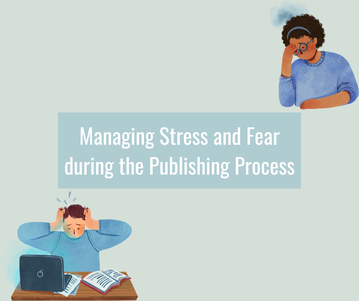
And then there’s the fear part of the publishing process—fear of submitting your manuscript in the first place, fear of letting go of the manuscript to a stranger, fear of losing that paragraph or sentence the editor thinks is needless, fear of sending your innermost thoughts out into the world, or even fear of success—if you should be so lucky. 

These fears can be daunting—especially if you’re self-publishing and navigating these frustrations alone. However, traveling this long road with a publisher who knows the unexpected curves, pitfalls, and cliffs on the way to publication can make the ride smoother. At Brandylane, we know how to provide this kind of writing and publishing therapy when it’s needed, and are happy to do so for the many authors who have published with us. 

written by Robert Pruett, publisher
0 Comments

January 2023 - Publishing Poetry

1/31/2023

0 Comments

 
Picture
In today’s crowded digital world, searching for and finding the right publisher for your poetry can be hard, frustrating work that often comes down to pure luck. Years ago, poets often published a chapbook, a collection of ten to fifteen poems assembled in a small volume, often saddle-stitched or artfully handmade. Chapbooks are still common among new poets who want to publish and print a limited number of copies of their work for their family, friends, and community; and they are still an excellent way to produce a small, attractive, polished sample collection with which to query larger publishers.

For serious poets who want to reach wider audiences, poetry journals publish poetry by both first-time and more established poets. Wildness Journal, Little Death Lit, Rattle, and Southeast Review are a few such journals, some of which actually pay poets upon publication. Exclusive journals like Poetry, Kenyon Review, and Ploughshares are looking for higher-level poetry for their audiences, and expect poets to have a portfolio of poems previously published by smaller journals, or a successful book. When it comes to journals and publishers that publish book-length collections, it’s important to study these publishers’ work before submitting to familiarize yourself with the style, themes, and subject matter they publish. And be sure to submit your work according to the publisher's guidelines—sending a manuscript by mail when the publisher requires an online submission will likely lead to rejection.

Speaking of rejection: Expect it. Rejection is part of the process of becoming a better writer. It may mean you have much to learn, or that your poem or collection just hasn’t found the right home.

Over the last few years, a number of poets have found a home for their work at Brandylane. We believe in nurturing our authors, guiding them through the publishing process, and helping them find and develop their audience. And although we don’t publish single poems, if you have even a small collection you’d like to put together in a chapbook or book, we're here to help.

written by Robert Pruett, publisher
0 Comments

May 2022 - Self-Publishing: The Realities and Pitfalls

5/31/2022

0 Comments

 
Picture
Many authors who contact Brandylane are struggling with an important decision: Should I self-publish my book, seek a literary agent, or submit my work directly to publishers? In recent years, self-publishing has become a popular option; but as it’s still a fairly new option for the broader public, misconceptions abound. Perhaps chief among these misconceptions is confusion over who is actually publishing the work, if an author receives help from another party during this process. The answer, however, is simple: When you self-publish—in the purest sense—you are the publisher of record. Your book and its International Serial Book Number (ISBN) are registered in your name, or in the name of a company you create, via which you will promote and market your book. In this case, any publishing company you may be paying to produce your book—that is, to create the physical copies, including printing, binding, and sometimes formatting the work—is the packager. In contrast, when you engage and pay a publishing company to publish your work under their imprint or name, they are the publisher, and you are not self-publishing in this case.

Self-publishing is challenging, and costly if done well. For many authors, it’s a journey into the unknown—and as a result, self-published books are often substandard or amateurish. Most savvy readers can easily tell when a self-published book hasn’t been produced by a crew of professionals: the manuscript may not have been carefully edited or proofread; the cover may be poorly designed, with photographs or illustrations that haven’t printed well due to their poor resolution; or the book may simply fail to meet other basic industry standards. Often, these shortcomings happen because, in an effort to save on costs, the author didn't hire an experienced designer or editor.

Another aspect of book publishing that some authors who choose to self-publish rarely consider is marketing. Successful marketing is an enormous factor in a book’s success, and people who choose to self-publish their work don’t receive the benefit of a publisher who will cooperate in the book’s marketing effort. While writing and producing their book, every author becomes their own promoter—but this is especially true of authors who choose to self-publish. The best time to start marketing your work is while it is still in production, so that when your book is released, you will have already built an eager audience that will incite book buyers to come knocking on your door. At this stage, smart self-publishers engage a marketing company or team of friends and family to provide support. Going it alone in your book’s marketing effort is a mammoth undertaking—and a mistake.

In summary, if you choose to self-publish your work, you must become a specialist in many fields at once—writing, design, market research, promotion, sales, even web design and accounting—or you must hire knowledgeable people to assist you. In addition to publishing titles under our imprints, Brandylane has guided many authors through the self-publishing labyrinth, making the process less intimidating and helping them avoid tricky turns and dead ends. We’re always happy to help authors self-publish their work—and we cheer their success as much as we do the books we publish under our imprints!

written by Robert Pruett, Publisher

0 Comments

December 2021 - Advice for New Fiction Authors from one of Brandylane's Senior Editors

12/31/2021

1 Comment

 
Picture
Q: In your view, what are the essential elements of a successful novel?

A: It’s actually quite difficult to outline “essential” elements of a successful novel, since the overall scope of novels can be so broad, there is almost always an outlier that doesn’t follow the “rules.” In general, however, most successful contemporary novels possess three elements that are so basically fundamental, they may seem obvious and even reductive: a coherent, logical plot; characters who function well within that plot, and a strong hook or theme. Fortunately, this final element can often emerge on its own from a strong plot and characters.

Q: What are a few of the biggest mistakes writers make when writing their first work of fiction? 
  • Writing without reading. An avid writer should be an avid reader. As you write your own book, take care not to limit your focus too much to your own effort, and continue expanding your literary horizons by reading other authors’ work.
  • Believing that after they’ve finished their first draft, they can move on to querying publishers without revising their manuscript, or without getting second opinions. Even experienced writers can spend months revising a manuscript by themselves before showing it to any readers, and months revising again after receiving feedback. If you’re a writer tackling your first work of fiction, you will likely make a few big mistakes that will need ironing out before your work can be considered saleable. In fact, in many cases, writers never sell their first novels. Some authors even write multiple novels before finally producing a book that catches the attention of a publisher! These unpublished novels aren’t failures or a waste of time, but rather a tax paid to attain a certain level of craft. Essentially, they’re practice. Allow yourself space to practice, like a violinist before a concert, and try not to get too married to the idea of selling the first novel you’ve ever written. Your concert might be waiting in the form of a second, third, or even fourth novel, and if you spend too much time querying your first effort, you might never get around to writing the work that will eventually make you famous.
  • Including logical inconsistencies. In addition to writing a story, a writer has the difficult task of laying out that story’s entire world for the reader. For the story to have the best effect, that world must be coherent. To ensure their worlds are coherent, authors must be aware what characters know which information when, and ensure that those characters react to new information in accordance with their characterization. Keeping track of the implications certain details and story beats have on the world you’ve created can be a big job, especially for first-time authors. 
  • Including irrelevant details, characters, or scenes that don’t serve a function in the story. Every element an author includes in a story should have some purpose; but even for experienced writers, it can be hard to recognize when a line, scene, detail, or character isn’t contributing anything meaningful to the work. Often, first-time authors write scenes because they want to see them—but sometimes, these scenes do not end up being the most effective vehicles to communicate the author’s message. This is why one of the most common phrases you might hear from an editor is to “kill your darlings.”  
  • Overusing certain words, literary devices, constructions, or clichés, to the distraction of the reader. First-time writers often lean on comfortable clichés and comparisons, or familiar words and turns of phrase. Maybe you’re a chronic purveyor of ellipses. Maybe your characters constantly “murmur” when they speak. Or maybe you’re a little too over the moon about the phrase “over the moon.” An author can have a signature style and technique, but every choice should be intentional, and authors sometimes unconsciously default to certain phrases. When readers pick up on these phrases, it can make the author’s writing feel stale.

Q: How do you recommend first-time authors avoid these mistakes?
  • Read what other authors have written—both their fiction, and what they have to say about their writing process. Reading others’ books will help you absorb new ways to envision the world and new ways to approach the act of writing, both of which will enrich your own work.
  • Before you send out a manuscript, set it aside for a month or so, and then pull it out and revise it on your own. Even better, get a beta reader—or several! The more readers you have before you query publishers, the more you’ll be able to learn about how a variety of people might receive your story—provided you ask a variety of people to read your book. Ask each reader to give you their first impressions of the book, share their favorite parts, and tell you something that confused them about the work. Tell them to be honest, and try not to take offense at anything they might say—chances are if one of your readers feels a certain way about something in your book, so will many others. Use this opportunity to change your work based on their feedback, before you send your book out into the world, and make sure you let your readers know how much you appreciate their advice.
  • Construct a timeline of events for your novel. Some authors find they don’t need to do this, but many do, especially if their novels are particularly long, complex, or well populated with many characters. As you write, make a separate outline, including each scene as a separate bullet point; or create a physical timeline by listing or on a series of notecards. Include each scene, and break it down as much as you need to, including information such as the date and time, new information each character has learned, the characters’ current emotions, and when new characters or important items appear in the work. This may sound more like recordkeeping than writing, but it will help you find inconsistencies in your story more easily.
  • Ask why. As you write, or as you reread your finished book, constantly ask yourself why. Why is this character—this detail—this line—this scene—included at this point? What purpose is it serving in a scene, or even in the novel itself? Sometimes, an author might find multiple characters who serve small but separate functions in a novel can be combined into one. Sometimes, entire scenes that don’t contribute to the story in any meaningful way can be excised to refine a story and make it more powerful. More than anything, asking why will get you thinking like a professional author.
  • Root out repetition. As you write, or as you reread your finished book, pay attention to words and turns of phrase that appear again and again. (Microsoft Word’s Find function can be a big help here, quickly showing you that yes, you did use the phrase “cast her eyes down” seventeen times in your sixty-thousand-word novel.) Of course, an editor can also help you pick out overused phrases, words, and syntax in your drafts, but learning to identify these elements of your writing on your own can help you avoid them before they appear on the page.
an interview with Erin Harpst, Senior Editor
1 Comment

November 2021 - Focusing on Your Intentions

11/30/2021

0 Comments

 
Picture
After four decades of working with authors, I still believe writers must keep two key elements in mind when composing nonfiction: purpose and audience. As you write, it’s important to ask: for what purpose am I writing this chapter, and to whom am I writing?  

As passionately devoted as you may be to the end goal of your book or chapter, it can be easy to drift off the path and/or forget your audience. To combat this, an editor can determine whether your work is fulfilling its originally intended purpose. 

An experienced, sensitive developmental editor can help you define and sharpen your manuscript's essential points. Developmental editing is typically the first step in the editing process, so a developmental editor is often the first line of defense against a blurry big picture, misdirected voice, lack of focus, disorganization - and waste. Ultimately, every sentence, paragraph, and chapter should focus on the intention driving the piece you are writing, and its anticipated audience. All else must be cleared away, so that what remains is only the clear and pointed fulfillment of your intended purpose. To repeat E.B. White’s endless refrain, “Omit needless words!” 

Cutting carefully written passages from your manuscript can be agonizing, so you must be brave and patient. In the end, if you follow your editor’s guidance, your purpose will have been fulfilled, and your audience will know it.

written by Robert Pruett, Publisher
0 Comments

September 2021 - The Editing Dilemma

9/30/2021

0 Comments

 
Picture
Authors face two important questions when they complete a draft of a manuscript: who shall I engage to edit my work, and how can I evaluate an editor to assure I’m making a wise choice?

Frequently, submitting authors tell us their manuscript has been professionally edited. In many cases, however, we discover that the editor is not a qualified professional but a good friend of the author who offered to help, and that the work is poorly executed. (Telling your potential publisher you edited your own work is also a bright red flag!) 
   

I discourage authors from engaging a friend who may be easy on you to edit your work. Becoming a book editor requires much more than loving books, reading voraciously, or majoring in English! Much like a lawyer practices law or a doctor practices medicine, professional editors practice editing, and I can assure you, one never perfects the art. 
   

Finding an editor you can work with cooperatively can be challenging, as can finding one with the right credentials who offers their skills for a reasonable cost. Be cautious, and don't settle. Look for an editor who has demonstrated a high level of skill in editing previously published work—as recognized by respected reviewers or publishers—and who is well versed in the Chicago Manual of Style (CMS), the industry bible for book editors. 
   

Price is of course a big concern; depending on the condition and complexity of the manuscript, great editing can be expensive, but standard industry rates usually apply. I recommend avoiding editors who bill by the hour rather than by the word. Although engaging the services of a slower, meticulous editor can be a plus, the cost for a word rate is more predictable. At Brandylane, we follow industry standards and rates, and we always work hard to make the syntax sing while preserving what makes a book truly memorable: the author’s voice. 
   

written by Robert Pruett, Publisher
0 Comments

    Archives

    August 2024
    July 2024
    January 2024
    November 2023
    September 2023
    August 2023
    July 2023
    May 2023
    March 2023
    February 2023
    January 2023
    December 2022
    November 2022
    October 2022
    September 2022
    June 2022
    May 2022
    April 2022
    March 2022
    February 2022
    January 2022
    December 2021
    November 2021
    October 2021
    September 2021

    Categories

    All
    Advice
    Author Profile
    Authors In Action
    Exploring Book Topics
    Marketing
    News
    Reviews
    Social Media
    Writing Tips

    RSS Feed

Powered by Create your own unique website with customizable templates.